
Why take lecture notes?
- Promote active listening
- Promote an accurate record of information
- Provides an opportunity to interpret, condense and organize information
- Provides an opportunity for repetition of material.
NOTE-TAKING STRATEGIES
- Steps in the listening and note-taking:
- Decide to listen
- Receive massages
- Pay attention
- Select relevant information
- Interpret information
- Condense information
- Organize information
- Take notes
Note-taking systems:
- THE INFORMAL OUTLINE
- THE BLOCK METHOD
- THE MODIFIED-BLOCK METHOD
In our notes need:
- Heading
2. Details:
- Facts
- Explanations
- Definitions
- Enumerations
- Examples
- -Anything repeated or spell
3. Anything on:
- Chalkboard
- A PowerPoint slide
- A transparency
4. Drawing, charts, or problems written on the board
5. Conclusion statements
Why you should edit notes?
- To get an accurate record of information
- To review both the text and lecture material an integrate the course material
- To get feedback on your note-taking
- To organize the information in your notes
- Prepares your notes for later review by adding recall questions in the margin
How to edit notes?
- Fill in gaps
- Check for accurancy
- Clarify meaning
- Improve organization
- Develop recall questions
How to take lecture notes:
5R

CORNELL NOTE TAKING
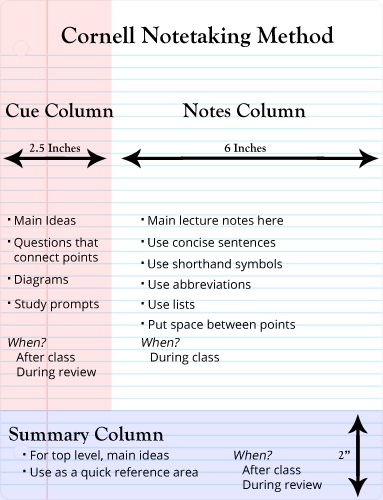
NOTES:
This section is where you should take your notes during the course of the lecture.
- Use bullets, sentences, shortform
CUES/KEYWORD:
Questions, main points, visual clues, and other clues that run in your memory write there
- Fill this section right after class
SUMMARY:
Most important points and main ideas write threre.
- Fill this section right after class when you are in the reviewing process.
EXAMPLE OF CORNELL NOTE:

 Faiz CHU's blog